
Pīpīwai TrailOn the trail
The Kīpahulu District
Last checked 2026-08-23
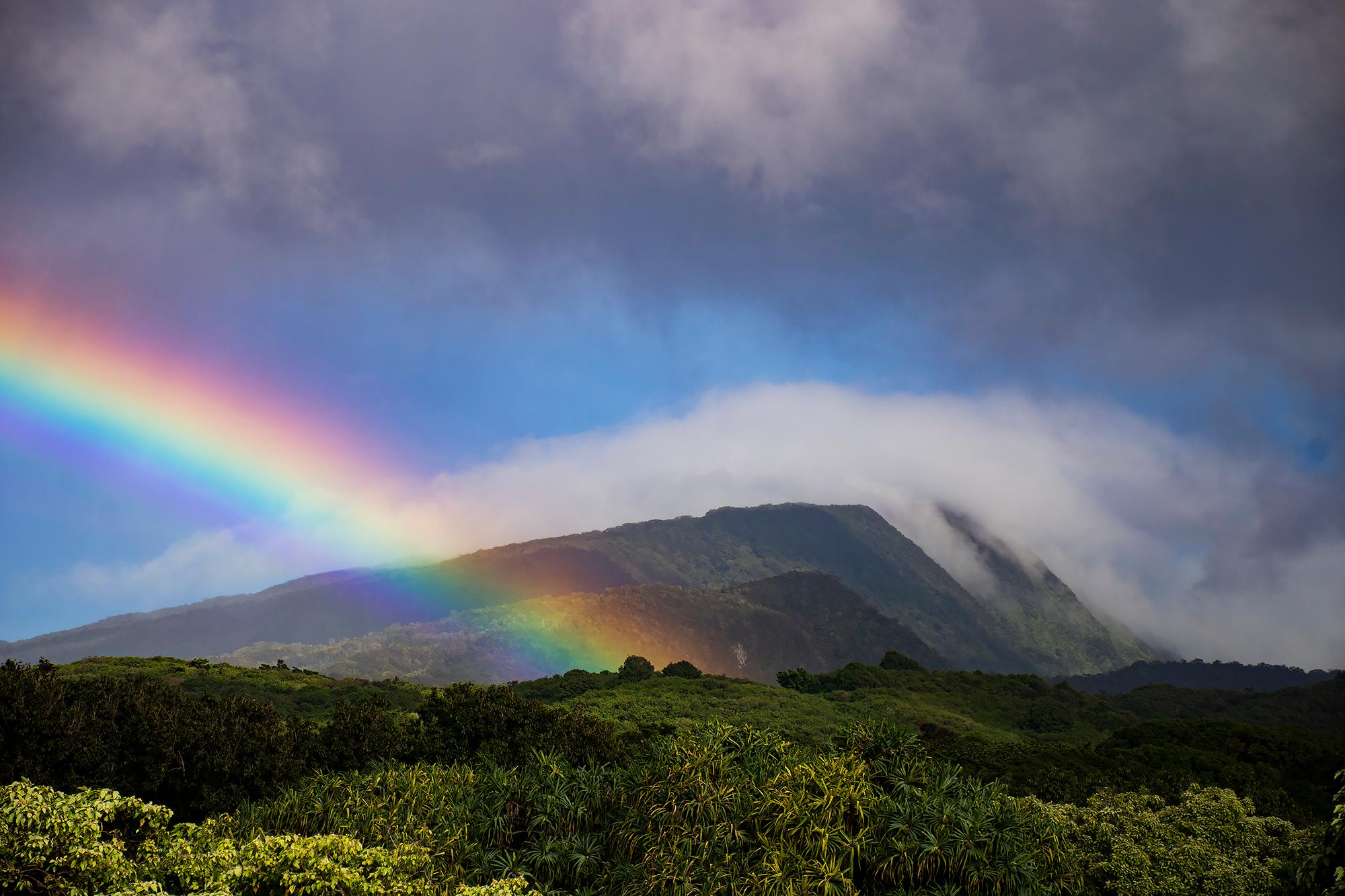
NPS public domain, Kīpahulu District
Kīpahulu is the coastal district of Haleakalā National Park, 12 miles past Hāna at the far end of the highway, and it is where both the Pīpīwai Trail and the Kūloa Point Trail start. People have lived here for hundreds of years and families still do, which is why this is managed as a living cultural landscape rather than scenery. There is a visitor center, restrooms, picnic tables, and a campground. There is no gas, no food, and no drinking water.
| Facility | Kīpahulu |
|---|---|
| Visitor center | Yes, 9am to 5pm, staffing permitting |
| Restrooms | At the trailhead only. None on either trail. |
| Drinking water | None anywhere in the district. Bring your own. |
| Picnic tables | Yes, near the visitor center |
| Food and gas | None. Nearest is Hāna, 12 miles back. |
| Camping | Kīpahulu Campground, reserve on Recreation.gov |
| Parking lot gates | Closed at 5pm |
| Emergency care | Over 1 hour away, with no cell signal |
Pīpīwai stops in this district
- 1
0.5 mi · First waterfall view
- 2
~1 mi · Boardwalks and footbridges
- 3
2 mi one way · 400 ft falls
Where is Kīpahulu and what is it?
It is the seaward end of Haleakalā National Park, 12 miles beyond Hāna town. The summit district and this one are the same park and the same $30 pass, valid 3 days, but they do not connect by road. Getting from one to the other is a three hour drive around the mountain.
What you find at the end of that drive is a wet green coastal valley with a stream running out of it, two trails, and a small visitor center. The park calls this district Ka ʻĀina O Ka Makani Kāʻili Aloha, Land of the love-snatching wind. It rains here regularly and at short notice, so dress for hot, humid weather and rain in the same afternoon.
Is the Kīpahulu Visitor Center open, and what is there?
Hours are 9am to 5pm, staffing permitting, which is the honest version of the answer, because this is a remote station and a day short of staff means a closed door. Rangers are based here. When you get in, it is worth ten minutes: they know what the stream did overnight, whether the crossings before Waimoku are running high, and whether the falls are at any real volume this week. That is information no website can give you.
Ranger programs run in this district, and the schedule is posted at the visitor center rather than fixed months ahead. There is a Hawaiian cultural demonstration area on the Kūloa Point Trail used for those programs when practitioners are on site, and near the fork where the two trails split stands Hale Hālāwai, a reconstructed Hawaiian meeting house near the trailhead fork. If a talk is posted for the hour you arrive, take it before the hike rather than after.
Restrooms are at the trailhead and there are none on either trail. Picnic tables sit near the visitor center. There is no potable water anywhere in the district, so fill every bottle in Hāna, and the lot gates close at 5pm, so plan the 2.5 to 3.5 hour Pīpīwai hike backward from that.
What does Ka ʻĀina O Ka Makani Kāʻili Aloha mean?
Land of the love-snatching wind. The wind it refers to comes off the ocean and up the gulch hard enough to take a hat off at Kūloa Point. Names like this one are descriptions rather than decoration, which is worth remembering every time a place here has a Hawaiian name and an English nickname.
People have lived on this coast for hundreds of years, and the past tense is wrong. Families farm above the park boundary now, taro is grown in the valley, and cultural practitioners work with the park on the land you walk across. The stone walls and terraces along the Kūloa Point Trail are the physical record of that. They are protected sites, so do not climb on them or move stones.
What is an ahupuaʻa?
A traditional Native Hawaiian land division that protects all resources from sea to summit. In practice it is a wedge of land running from the reef up to the ridgeline, so one community holds fishing grounds, coastal flats, taro terraces, forest, and upland at once and manages them as a single system. It works because water runs downhill and everything below depends on what happens above it.
Kīpahulu is one of the few places where several of these divisions survive largely intact from sea to summit. That is much of why the park protects the district and why the upper valley is closed to the public as a biological reserve.
What lives in the streams here?
Fish that climb rock. The streams here hold endemic gobies and other fish species that evolved from ancient salt water ancestors, and the remarkable part is what they do with their fins. The pelvic fins fuse into a suction disc, and with it a goby a few inches long can work its way up wet vertical rock, past waterfalls, into upper reaches where nothing can follow and eat it.
Their life cycle runs the whole ahupuaʻa. Eggs hatch upstream, larvae wash down to the ocean, and the young fish return months later and climb back up, which is why breaking a stream anywhere along that line breaks the cycle. The district also has freshwater shrimp and rock-climbing goby, and the shrimp are what you are most likely to spot from the Pīpīwai crossings if you stand still over a quiet pool for a minute.
Can you camp in Kīpahulu?
Yes. Kīpahulu Campground is a drive-up site near the ocean in this district, and it is one of the few places to sleep anywhere near the trailhead. Reservations go through Recreation.gov on a rolling 30 day window, so a site opens 30 days ahead of any given date rather than being bookable a year out.
Manage your expectations. Drive-up camping in Kīpahulu. Often wet, remote, and far from amenities. No showers, no hookups, no store, and the grass is often wet because it rains here at night more than during the day. Bring everything, including water. What you get in exchange is being on the trail at first light instead of driving three hours to reach it, which is the biggest single improvement available to a Pīpīwai day.
Sleeping in a vehicle outside a designated campground is prohibited throughout the park, and that includes the trailhead lot, which gates at 5pm anyway.
What should you know before driving out here?
That it is genuinely remote, in a way the drive does not prepare you for until you need something. There is no gas and no food in the park and the last of both is in Hāna, 12 miles back. Cell service is poor to nonexistent. Emergency care is over 1 hour away, and that is driving time after someone has walked out to report the problem.
Bring mosquito repellent, sturdy shoes, water, sunscreen. Pay the entrance fee by card, because they do not take cash. Pets are prohibited on all trails. Hiking groups are capped at 12 people and larger parties have to split by 30 minutes. Stream entry across the district is not recommended, leptospirosis is present in the fresh water, and the Pools of ʻOheʻo are closed to entry outright.
One more, and it takes a minute. Clean soil off your shoes before and after. Rapid ʻŌhiʻa Death is a fungal disease spread on dirt. The ʻōhiʻa along the Pīpīwai Trail are the structure of the forest that makes this walk worth the drive, and the fungus travels between valleys in the mud in your treads.
Questions
- Where is Kipahulu?
- 12 miles past Hāna on the Hāna Highway, at the coastal end of Haleakalā National Park. It does not connect by road to the summit district.
- What are the Kipahulu Visitor Center hours?
- 9am to 5pm, staffing permitting. Rangers are based there and the parking lot gates close at 5pm.
- What is there to do in Kipahulu?
- Two trails from one lot: Pīpīwai, 4 miles inland to Waimoku Falls, and the Kūloa Point Trail, 0.5 miles down to the coast and the Pools of ʻOheʻo. Plus ranger programs and a cultural demonstration area.
- Can you camp in Kipahulu?
- Yes, at Kīpahulu Campground. Reserve through Recreation.gov on a rolling 30 day window. It is wet and remote, and sleeping in a vehicle outside a campground is prohibited.
- Is there food or gas in Kipahulu?
- No, and no drinking water either. The last of all three is in Hāna, 12 miles back. There are restrooms and picnic tables at the visitor center.
- Does the Haleakala entrance fee cover Kipahulu?
- Yes. $30 per vehicle for 3 days covers Summit and Kīpahulu. Card only, no cash.
Sources: https://www.nps.gov/hale/planyourvisit/kipahulu-district.htm · https://www.nps.gov/hale/planyourvisit/kipahulu.htm · https://www.nps.gov/hale/planyourvisit/fees.htm · https://www.nps.gov/hale/planyourvisit/hiking.htm · https://www.recreation.gov/